

Air movement through a typical industrial doorway.
This figure illustrates the principal paths through which uncontrolled airflow can influence heat loss and environmental conditions.
B-010
QUANTIFYING BUILDING PERFORMANCE
Engineering decisions become more reliable when building performance can be measured objectively. Rather than relying upon opinion or subjective impressions, engineers quantify energy use, air leakage, thermal performance, operational efficiency and environmental conditions using measurable engineering parameters. Quantification allows buildings to be compared, improvements to be prioritised and performance to be monitored over time.
Professional engineers seek evidence that can be measured, compared and verified. While visual inspections provide valuable information, meaningful engineering decisions require objective data that accurately describes how a building performs. Quantifying performance allows engineers to understand the scale of individual problems, compare alternative solutions and evaluate whether completed improvements have achieved the intended results. Measurements such as air permeability, thermal transmittance, energy consumption, internal environmental conditions and industrial door performance transform observations into engineering evidence. This evidence forms the basis of reliable recommendations, confident investment decisions and continuous improvement throughout the operational life of industrial buildings.
What Cannot Be Measured Cannot Be Managed
OBSERVATION
Engineering decisions become more reliable when building performance can be measured objectively. While visual observations identify potential issues, they cannot quantify their significance or demonstrate the likely benefits of improvement. Engineers therefore collect measurable evidence that describes how the building performs under normal operating conditions. Quantified measurements transform subjective observations into objective engineering data, enabling performance to be compared over time and supporting informed investment decisions. Measuring performance provides the foundation upon which reliable engineering assessment, prioritisation and continuous improvement are built.
ENGINEERING PRINCIPLE
EP07 – Engineering decisions should be based upon measured evidence.
Objective engineering measurements provide the evidence required to understand building performance, evaluate improvements and support reliable engineering decisions.
Engineering measurements replace opinion with evidence. By quantifying performance, engineers can identify problems accurately, compare solutions objectively and verify whether improvements have achieved their intended results.

P-001 A detailed engineering infographic illustrating how objective measurements transform observations into reliable engineering evidence. A cutaway industrial warehouse forms the centrepiece, with engineering callouts highlighting measurable performance indicators including air leakage, thermal performance, internal temperature, humidity, pressure difference, energy use and industrial door operation. Supporting panels explain the role of representative measurements, objective evidence and engineering decision-making, demonstrating how quantified data provides the foundation for accurate building assessment and continuous improvement.
ENGINEERING REFLECTION
If performance cannot be measured, it cannot be evaluated with confidence.
Using Engineering Performance Indicators
OBSERVATION
Professional engineers describe building performance using measurable engineering parameters rather than subjective opinions. Air permeability, thermal transmittance, internal temperatures, energy consumption, humidity, pressure differences and industrial door operation all provide objective indicators of how efficiently a building performs. These engineering measurements allow different buildings, systems and improvement options to be compared consistently. Quantification enables engineers to evaluate existing performance, identify deficiencies and communicate technical findings using objective evidence that can be independently verified.
ENGINEERING PRINCIPLE
EP07 – Engineering decisions should be based upon measured evidence.
Engineering performance should be evaluated using objective measurements that accurately describe how a building behaves under representative operating conditions.
Performance indicators provide engineers with a common engineering language that supports accurate comparison, reliable diagnosis and evidence-based decision-making.

P-002 A professional engineering infographic explaining how engineers evaluate industrial building performance using measurable engineering parameters. The warehouse cutaway is surrounded by engineering indicators including airtightness, thermal performance, internal environmental conditions, energy consumption, pressure differences, lighting performance and industrial door operation. Supporting panels describe the engineering measurement process and demonstrate how objective performance indicators enable reliable comparison, diagnosis and evidence-based decision-making.
ENGINEERING REFLECTION
Objective measurements allow engineering performance to be discussed using facts rather than opinions.
Comparing Engineering Performance
OBSERVATION
Measurements become more valuable when they can be compared against recognised benchmarks, previous assessments or similar buildings. Benchmarking allows engineers to determine whether observed performance is typical, unusually good or in need of improvement. Comparing measured performance against established engineering standards helps identify priority areas for investment and demonstrates where the greatest opportunities exist. Benchmarking also enables building owners to monitor progress over time and evaluate the effectiveness of completed engineering improvements using objective evidence rather than assumptions.
ENGINEERING PRINCIPLE
EP09 – Effective engineering prioritises improvements that deliver the greatest overall benefit.
Engineering benchmarking identifies where improvements will produce the greatest benefit by comparing measured performance against meaningful reference values.
Benchmarking transforms individual measurements into engineering insight by placing them within an appropriate technical context. Engineers compare buildings to identify priorities and justify investment.

P-003 A technical engineering infographic demonstrating how benchmarking helps engineers compare measured building performance against recognised standards and similar buildings. A central warehouse cutaway is supported by comparison tables for air leakage, thermal performance, internal temperature, humidity, pressure difference, energy use and industrial door cycle times. Engineering panels explain how benchmarking identifies performance gaps, prioritises improvements and supports evidence-based investment decisions.
ENGINEERING REFLECTION
Measurements become more valuable when they can be compared.
Verifying Engineering Improvements
OBSERVATION
Engineering recommendations should always be supported by evidence demonstrating that completed improvements have achieved the intended results. Repeat measurements collected after engineering work has been completed allow engineers to verify reductions in energy consumption, improved environmental conditions, reduced air leakage and enhanced operational performance. Verification confirms whether engineering objectives have been achieved and provides confidence that investment has delivered measurable value. Measuring before and after improvements also creates valuable evidence for future engineering assessments and continuous building optimisation.
ENGINEERING PRINCIPLE
EP05 – Engineering decisions should be based upon measured evidence.
Engineering improvements should be verified using representative measurements that demonstrate objective changes in building performance.
Verification confirms that engineering recommendations have produced genuine performance improvements. Objective evidence demonstrates value and supports future engineering decisions.

P-004 A comprehensive engineering infographic illustrating how engineers verify the success of building improvements through before-and-after measurements. A warehouse cutaway compares performance before engineering improvements with measured results after implementation, highlighting reductions in air leakage and energy consumption together with improvements in environmental conditions and industrial door performance. Supporting engineering panels explain the verification process and demonstrate how objective measurements confirm the value of engineering investment.
ENGINEERING REFLECTION
Successful engineering improvements should always be capable of being measured.
From Measurement To Engineering Confidence
OBSERVATION
Successful engineering assessments combine objective measurements, representative sampling and professional engineering judgement to produce a quantified understanding of building performance. This measured evidence enables engineers to identify priorities, compare alternative solutions, estimate likely benefits and recommend improvements with confidence. Quantified engineering performance reduces uncertainty throughout the decision-making process and provides building owners with objective evidence upon which to base future investment. Measuring, understanding and verifying performance together create the foundation for effective engineering management throughout the life of an industrial building.
ENGINEERING PRINCIPLE
EP07 – Engineering decisions should be based upon measured evidence.
Objective engineering measurements reduce uncertainty, improve engineering understanding and support confident long-term decision-making.
Quantifying building performance allows engineers to move beyond observation and opinion. Reliable measurements provide confidence that engineering recommendations will deliver practical, measurable and lasting improvements.
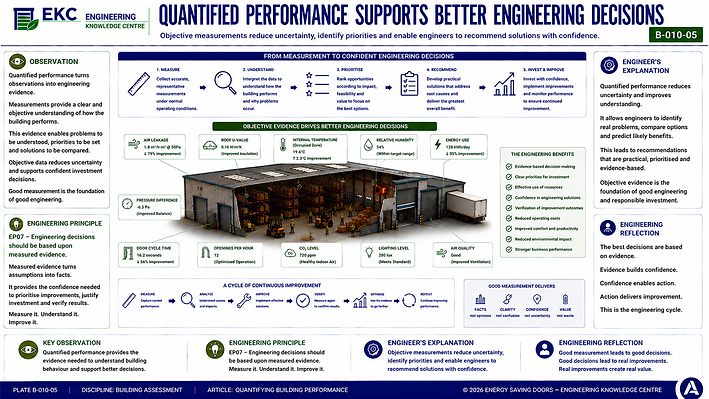
P-005 A professional engineering infographic showing how quantified building performance supports confident engineering decisions. A warehouse cutaway is surrounded by measured engineering indicators including thermal performance, airtightness, energy consumption, environmental conditions, lighting, air quality and industrial door operation. Process diagrams demonstrate how engineers measure, analyse, prioritise, recommend, implement and verify improvements, while supporting panels explain how objective evidence reduces uncertainty and leads to better long-term building performance.
ENGINEERING REFLECTION
The strongest engineering recommendations are supported by measured evidence rather than assumption.
ENGINEERING BAR
At A Glance

Discipline
Building Assessment

Category
Engineering Assessment

Reading time
8
mins

Last reviewed
July
In This Article
What Cannot Be Measured Cannot Be Managed
Using Engineering Performance Indicators
Comparing Engineering Performance
Verifying Engineering Improvements
From Measurement To Engineering Confidence
Continue Reading
→
This is a title. Click here
→
This is a title. Click here .
→
This is a title. Click here
Key Takeway
Objective engineering measurements allow building performance to be quantified, compared and improved with confidence.
Reading Tip
Click any engineering plate to view it full size.
Engineering Summary Plate

Explains how engineers compare measurements across locations, operating conditions and time to identify patterns, validate findings, distinguish genuine performance changes and develop more reliable conclusions from multiple evidence sources.
Engineering Summary
Professional engineering relies upon measurable evidence rather than assumption. Quantifying performance enables engineers to compare buildings, identify opportunities, justify investment and verify improvements through objective measurement.